
What to Know About Routine Generator Service and Recommended Intervals
Routine generator service keeps your standby unit ready to perform when the power goes out, and knowing the right service intervals can mean the difference between a generator that starts on demand and one that lets you down. For homeowners in and around Gainesville, MO, where rural Ozark County roads, wooded terrain, and seasonal storms make outages a recurring concern, staying on top of scheduled maintenance is especially important. This guide covers standard intervals, local factors that may affect your schedule, what you can check yourself, what needs a professional, and warning signs to watch for.
What Are the Recommended Generator Service Intervals?
Most Generac standby generators follow a clear maintenance schedule based on operating hours and time. The first service visit typically occurs after the initial 25 hours of operation. After that, routine maintenance is generally recommended every two years or every 200 run-hours, whichever comes first. Some technicians also suggest a general check every six months regardless of run-time to catch small issues early. Following the manufacturer's recommended schedule helps protect your warranty and keeps the unit running reliably for years.
"Run-hours" refers to actual time the generator is powering your home, not idle time. A unit that runs frequently during storm season will reach its 200-hour mark faster than one that rarely gets called into action.
How Does the Ozark Climate Affect Your Maintenance Schedule?
Living in the Ozarks introduces conditions that can push your generator harder than the calendar might suggest. Gainesville, MO, sits in Ozark County, where wooded ridges and rural power lines are vulnerable to ice storms in winter, high-wind events in spring, and severe thunderstorms throughout summer. Ice accumulations have knocked out power to thousands of Ozark County residents in a single event, and wind gusts of 60 to 80 mph have toppled trees and poles across the region. A generator serving a Gainesville-area home may log far more run-hours in one storm season than an urban unit does all year.
High summer humidity accelerates wear on belts, filters, and battery connections. During idle periods between storm seasons, rodents and insects may nest inside the housing or near wiring. Pest intrusion is a documented service concern in rural areas, and a routine inspection can catch it before it causes a failure at the worst possible time.
Because of these regional demands, many technicians recommend scheduling that annual visit before winter, when the generator's protection matters most heading into the season with the highest outage risk.
DIY Checks vs. Professional Generator Service Tasks
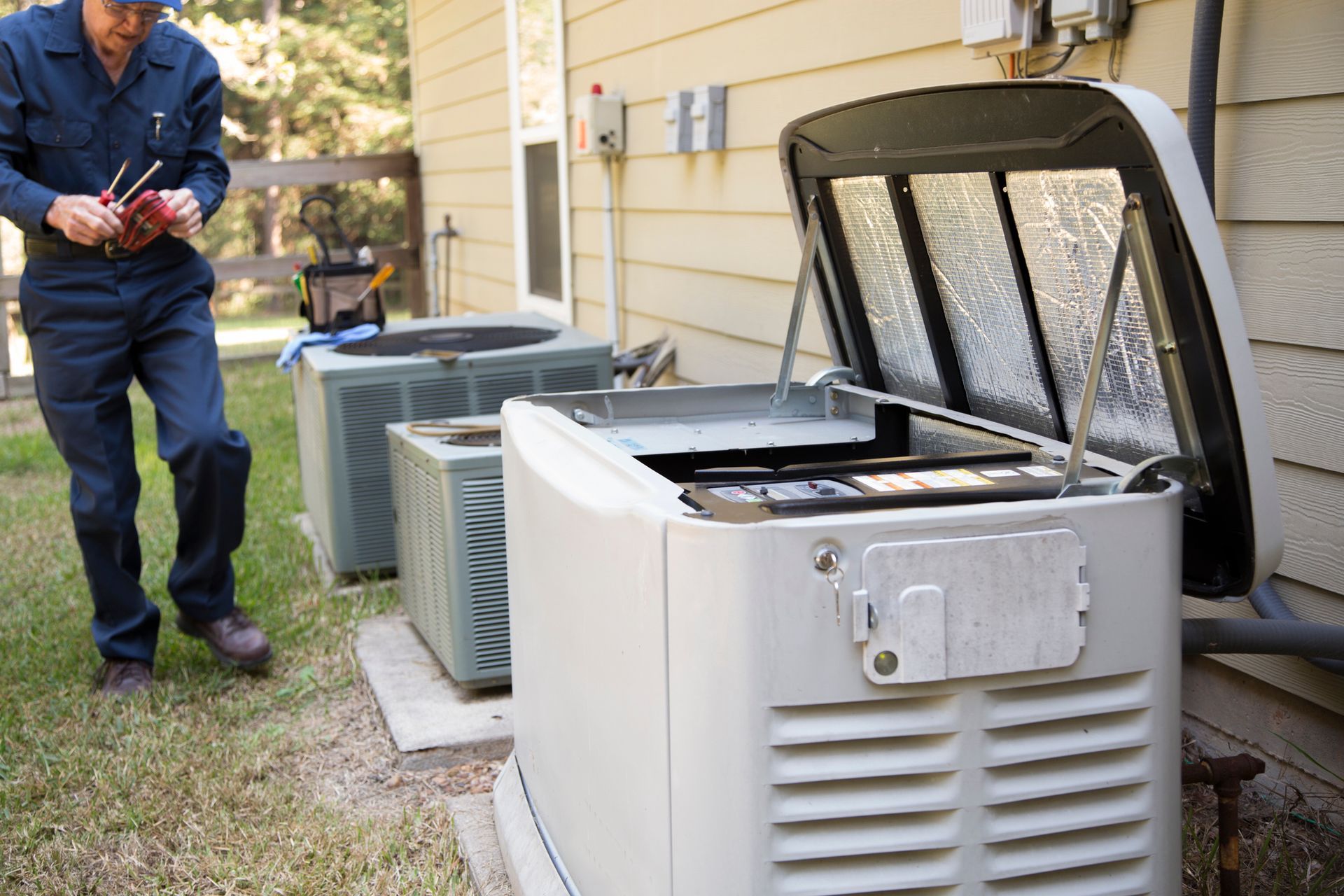
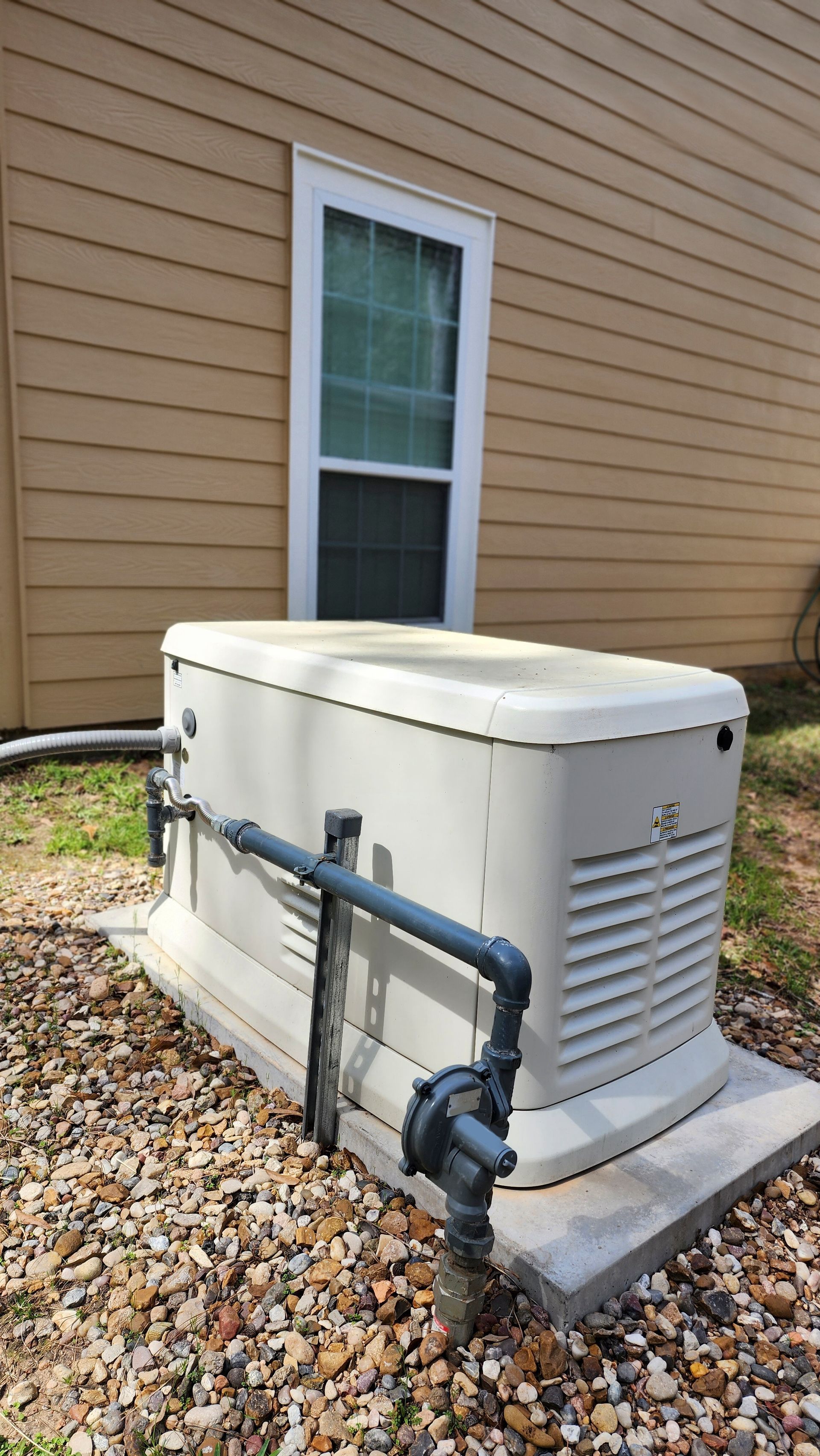
A homeowner can reasonably handle a handful of basic checks between scheduled visits, including visually inspecting the exterior for damage, rust, or debris; confirming the area around the unit is clear of vegetation and nesting material; verifying the generator completes its weekly self-test without fault codes or unusual noise; and checking that the fuel supply is active and the shutoff valve is open.
Professional generator service tasks are a different category. A trained technician typically handles changing the engine oil and filter, inspecting and replacing the air filter and spark plugs, testing the battery and charging system, inspecting the transfer switch, checking belts and the fuel system for wear or leaks, running a load test to confirm rated output, and logging service records including run-hours and exercise times.
Attempting professional-level tasks without the right training and tools can void your warranty and introduce new problems.
Warning Signs Your Generator Needs Service Sooner
Some symptoms suggest the unit needs attention before the next scheduled visit. Watch for the generator failing to start or hesitating during its weekly exercise run, oil leaks, unusual exhaust smoke or fuel odor, the unit tripping the transfer switch or shutting down under load, battery warning lights on the control panel, or signs of pest damage and nesting material inside the housing.
Any of these should prompt a call to a qualified service provider. A generator that shows warning signs during a routine exercise run may not be reliable when a real outage hits.
How Often Should a Generator Be Serviced?
The standard recommendation is every two years or every 200 run-hours, with the first service at 25 hours after installation. For homeowners in storm-prone rural areas like Gainesville, MO, where seasonal outages add significant run-time, enrolling in a two-year planned maintenance agreement, with one professional visit annually, is often practical. Always defer to your unit's owner's manual and the guidance of a factory-trained technician for your specific model.
Make the Most of Your Generator Maintenance Agreement
A planned generator service agreement takes the guesswork out of scheduling. Rather than tracking hours yourself, a two-year maintenance agreement typically locks in one professional visit per year, alternating between a light service and check-up one year and a full service and check-up the next. The visit is particularly well-timed for Gainesville-area homeowners when scheduled in fall, preparing the unit for Ozark winters before ice and snow arrive.
Keeping detailed service records also matters. Documented maintenance history may be required to support a warranty claim and helps a technician identify recurring issues more efficiently.
Schedule Generator Service Serving Gainesville, MO, With Butler Heating & Air
If your Generac standby generator is due for a checkup, or if you have noticed any of the warning signs above, now is the right time to act. Butler Heating & Air is a factory-trained Generac dealer serving the Gainesville, MO, area with professional maintenance and repair. The team understands the demands that Ozark County weather places on standby power systems and can help you build a service schedule that fits your unit's run-time and local conditions.
To learn more about available
generator maintenance agreements, visit the service page. When you are ready to schedule,
contact the team online or find
Butler Heating & Air
on Google to read reviews and connect.